


Whizz Pop Bang is a monthly science magazine for children aged 6 to 12, posted to your door with your child’s name on the envelope. Each 36-page issue picks one theme, from volcanoes to the science of poo, and fills it with experiments you can do with kitchen cupboard bits, puzzles, jokes, science news and interviews with real scientists. A rolling UK subscription costs £6.50 a month with postage included, or about £5 an issue if you pay for a year. There are no adverts and no plastic cover toys, which is exactly why parents like it. If your child asks “why?” fifty times a day, this is one of the best value subscriptions in the kids’ category.

Whizz Pop Bang at a glance
| What you want to know | The answer |
|---|---|
| What it is | A printed science magazine for kids, one issue a month |
| Age range | 6 to 12, though plenty of younger and older siblings join in |
| Price | £6.50 a month, £32.50 every 6 months or £59.99 a year, UK postage included |
| Gift option | 6 or 12 months prepaid that do not renew: £37.50 or £69.99 |
| Delivery | By post, arriving in the first half of each month |
| Extras needed | Household items for the experiments, listed in an email before each issue |
| Commitment | None on the monthly plan: cancel online in your account |
What is Whizz Pop Bang?
Whizz Pop Bang is made by Launchpad Publishing, a small independent publisher in Cirencester, Gloucestershire. It was set up by Jenny Inglis, a physics graduate and former Blue Peter science presenter, and the first issue came out in August 2015 after a successful Kickstarter campaign. The magazine now goes out to tens of thousands of families and schools every month. Launchpad also publishes a second children’s magazine, Hoopla, and has bought the Letterbox Lab science kit subscription and the Sublime Science and Science Boffins party businesses.
What makes it stand out is how seriously it takes the science while never feeling like homework. Issues are written by experienced children’s science writers, including Isabel Thomas, author of more than 100 science books for kids, and checked by a panel of science advisers that includes palaeontologist Steve Brusatte, ExoMars rover engineer Abbie Hutty and Imperial College physicist Dr Jess Wade. It is deliberately gender neutral, and a cast of cartoon characters (a robot called Y, scientists Emmi and Riley, and an alien called Gakk) carries kids through the pages.
What is inside each issue?
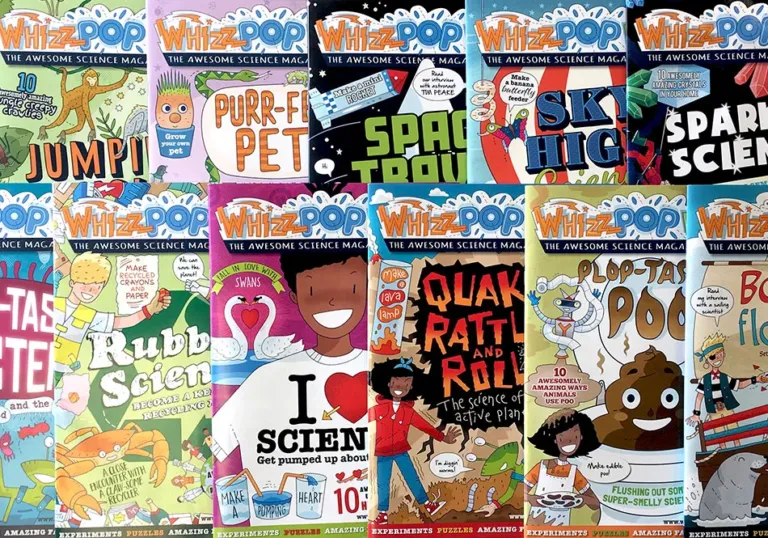
Every month has a single theme, and recent and past issues have covered space, pets, flight, magic tricks, volcanoes and, inevitably, poo. Inside a typical issue you get:
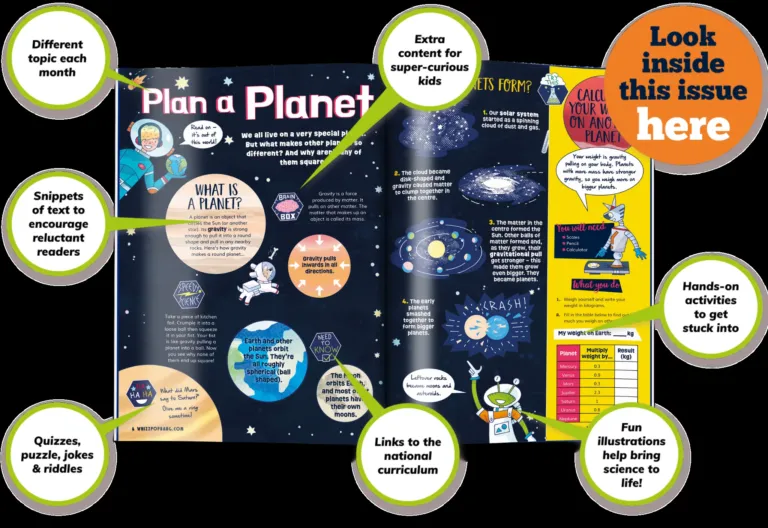
- Hands-on experiments that work at home or in a classroom, like engineering a zip wire for teddies or making colour-changing icing.
- Science news from around the world, rewritten for young readers.
- Interviews with real scientists, which do a lot to show kids what a science job actually looks like.
- Puzzles, quizzes, comics and jokes, broken into short sections so reluctant readers are not faced with walls of text.
- Space to scribble: it is printed on thick, uncoated paper so children can colour in, write answers and record their results.
There is no paid advertising at all. The only exception the publisher mentions is a small space for companies that donate competition prizes. There are also no cover gifts, by choice: the team would rather put the money into the pages than into plastic that ends up in a drawer. We think that is the right call, though if your child is used to toy-laden magazines from the supermarket, it may take an issue or two to win them over.
The kit list email is the clever bit
Before each magazine is posted, subscribers get an email listing everything needed for that month’s activities. It is mostly stuff you already have, such as bottles, paper, food colouring or bicarbonate of soda, and anything extra is cheap and easy to find. Lots of families use it to put together a little kit box so the experiments can start the moment the envelope lands. It solves the classic magazine problem of “we can’t do this one, we haven’t got any vinegar”.
How much does Whizz Pop Bang cost?
| Plan | Price | Per issue | Renews? |
|---|---|---|---|
| Monthly | £6.50 a month | £6.50 | Yes, until you cancel |
| 6 monthly | £32.50 every 6 months | about £5.42 | Yes |
| 12 monthly | £59.99 a year | about £5.00 | Yes |
| 6 month gift | £37.50 one-off | £6.25 | No |
| 12 month gift | £69.99 one-off | about £5.83 | No |
| Digital, 12 issues | £35.99 a year | about £3.00 | Aimed at overseas readers |
The real cost is refreshingly simple, because UK postage is already included in every price. There is no basket minimum, no delivery charge and nothing to add at checkout except the household bits for the experiments. Paying annually on the renewing plan is the cheapest way to get the printed magazine, at roughly £5 an issue, against a cover price of £6.50.
The gift subscriptions cost a little more because they do not auto-renew, which is fair: you are paying for the convenience of a present that simply stops. If you are buying for your own child, take the renewing annual plan and set a reminder; you can cancel at any time and still receive every issue you have paid for.
Readers outside the UK can subscribe too, with international postage included in prices shown in pounds, euros or dollars. Overseas print subscriptions are much pricier, so the digital edition is the better deal abroad.
How it works and when it arrives
- Choose a renewing plan (monthly, 6 monthly or annual) or a one-off gift subscription on the Whizz Pop Bang website.
- Sign up by midnight on the 4th of the month to get that month’s issue. After the 4th, your subscription starts with the next issue.
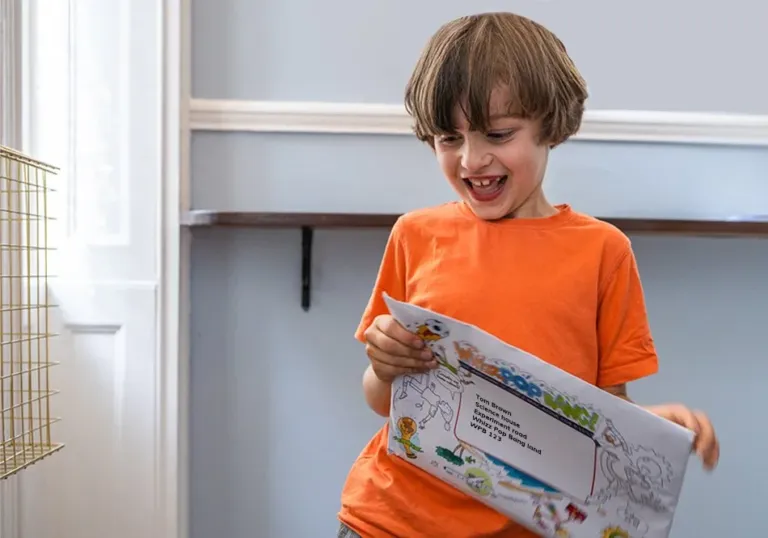
- The magazine is posted at the start of each month and UK copies arrive between roughly the 1st and the 12th, in an envelope addressed to your child.
- Monthly payments are taken on the 12th of each month. If you sign up close to the 4th, your first renewal comes quickly, but after that it settles into a normal monthly rhythm.
If a copy has not turned up by the 15th, Whizz Pop Bang asks you to get in touch, and you need to report a missing issue within three months to be sure of a replacement. Want something sooner? You can buy the current issue from the online shop alongside your subscription, and back issues are sold individually too, which is a cheap way to try it.
Gifting, skipping and cancelling
The one-off 6 and 12 month subscriptions are built for gifts. You can add a message that is printed and sent with the child’s first magazine, and they end automatically. Check out one subscription at a time if you are buying for several children.
There is no skip or pause button, which is normal for a magazine. You can switch between payment plans in your account, and you can cancel online under Your Subscriptions. Once you cancel, no more payments are taken and the magazines stop when the paid period runs out. Non-monthly plans get a reminder email before they renew. Refunds for the unused part of a subscription are at the publisher’s discretion, so do not count on getting money back mid-term.
Who is it best for?
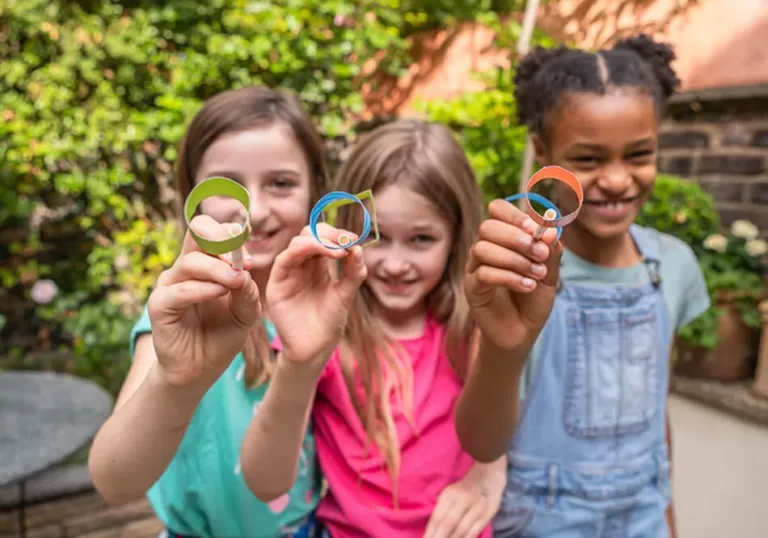
Whizz Pop Bang hits the sweet spot for curious 7 to 10 year olds, especially kids who love making things or asking how stuff works. Six year olds will need a grown-up to read along and help with the experiments; confident 11 and 12 year olds still enjoy it, though some will start craving something meatier. Its short sections and comic style make it a good pick for reluctant readers, and teachers use it too, with a separate schools subscription and links to the national curriculum.
It is less suited to children who want a box full of components to build, or to families who never have time to do activities together. The magazine is at its best when someone sits down with the kit list and actually does the experiments.
What makes it different?
- Science first: most kids’ magazines dabble in science; this one is entirely about it, with expert writers and advisers behind every issue.
- No ads, no tat: no paid adverts and no plastic gifts, printed on paper from sustainable forests.
- Low cost per hour of fun: at around £5 an issue, a month of experiments costs less than most single science kits.
- Built for doing: the kit list email and write-in pages turn reading into hands-on time.
Alternatives to Whizz Pop Bang
- National Geographic Kids: the pick for animal and nature fans, with big photography and fact cards rather than experiments.
- The Week Junior: a weekly news magazine for 8 to 14s, better if your child is into current affairs more than science.
- Letterbox Lab: monthly science kits with all the materials included, if you want the experiments without the shopping list. Letterbox Lab now belongs to Launchpad Publishing, the same company as Whizz Pop Bang.
- KiwiCo: build-it-yourself STEM crates for a wide age range, at a higher price per month.
- MEL Science: chemistry and physics experiment sets for older children who are ready for real kit.
- CrunchLabs: engineering toys to build, with videos, for kids who like big projects.

Our verdict
Whizz Pop Bang is one of the easiest kids’ subscriptions to recommend. It is cheap for what it is, the prices are all-in, it is free of adverts and plastic, and the science is properly checked by people who know their stuff. The only real catch is that it is a magazine, not a kit: the magic happens when an adult helps gather the bits and gets stuck in. If you can manage that once or twice a month, an annual subscription at around £5 an issue is great value, and the gift version is one of the best presents you can give a curious 6 to 12 year old.
Not sure? Look through the free sample issue on the Whizz Pop Bang website, or buy a single back issue from the shop before you commit.
Frequently asked questions
Whizz Pop Bang: your questions answered
How much is a Whizz Pop Bang subscription?
A renewing UK subscription costs £6.50 a month, £32.50 every 6 months or £59.99 a year. One-off gift subscriptions cost £37.50 for 6 months or £69.99 for 12 months. UK postage is included in all prices.
What age is Whizz Pop Bang for?
It is aimed at children aged 6 to 12. Younger children can enjoy it with an adult reading along, and some older children keep reading it too.
How often does Whizz Pop Bang come out?
It is monthly. UK copies are posted at the start of the month and usually arrive between the 1st and the 12th.
When will my first issue arrive?
Sign up by midnight on the 4th of the month to receive that month’s issue. If you sign up after the 4th, your subscription starts with the next month’s magazine.
Does Whizz Pop Bang come with free gifts?
No. There are no plastic cover gifts, by design. Instead, subscribers get a kit list email before each issue so they can gather the household items needed for the experiments.
Do I need to buy special equipment for the experiments?
Usually not. Most activities use things you already have at home, and anything extra is cheap and easy to find. The kit list email tells you what you need in advance.
How do I cancel Whizz Pop Bang?
Log in to your account, go to Your Subscriptions, click View/Edit and choose to cancel. No further payments are taken and you keep receiving the issues you have already paid for.
Can I give Whizz Pop Bang as a gift?
Yes. The 6 and 12 month one-off subscriptions do not renew, and you can add a gift message that is sent with the first magazine.
Is there advertising in Whizz Pop Bang?
No paid advertising. The only branded content is a small space for companies that donate competition prizes.
Can I get Whizz Pop Bang outside the UK?
Yes. International print subscriptions include postage, and there is a cheaper annual digital subscription for readers overseas.





Questions & reviews
Have a question about this box?
Share a question, opinion or experience. Our team reads every message and will reply.