

The Week Junior is a weekly news magazine for children aged 8 to 14, and it is the best way we know to get a child reading about the real world without scaring them. Every Friday it lands on the doormat with the week’s biggest stories explained in plain, calm language, plus science, animals, sport, books, puzzles and a debate page that asks them what they think. A print subscription works out at roughly £2 to £3 an issue, well under the £3.99 shop price, and you can cancel the renewal whenever you like. If you have a curious child who asks “why?” at the dinner table, this is money well spent.

The Week Junior at a glance
| What you want to know | The answer |
|---|---|
| What it is | A weekly current affairs magazine for 8 to 14 year olds |
| Who makes it | Future plc, the publisher behind The Week. The Week Junior launched in the UK in 2015 |
| How often | Every week, 52 issues a year, delivered on Fridays |
| Formats | Print, Digital, or Print + Digital |
| Price | Print from £37.99 a quarter, or less if you pay for six or twelve months up front. Shop price is £3.99 an issue |
| Delivery | Included in the price in the UK; worldwide delivery available at regional prices |
| Cancelling | Rolling subscription, cancel the renewal any time at mymagazine.co.uk |
| Best for | Curious kids, reluctant readers who prefer short articles, and families who want to talk about the news together |
What is inside The Week Junior?
Think of it as a proper newsmagazine, scaled down in tone rather than in ambition. Each issue follows the same structure, which children quickly learn to navigate on their own:
- This week’s big news: the main stories from around the world, explained so an 8 year old can follow them.
- National news: a selection of the most important and interesting stories from across the UK.
- Science and technology: discoveries, space, gadgets and the odd brilliant oddity.
- The Big Debate: both sides of an issue, then an online poll so readers can vote.
- People: who is making the headlines and why.
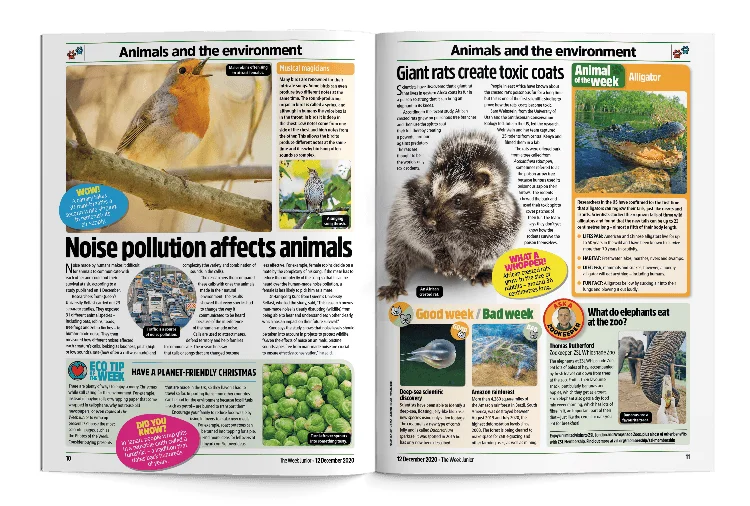
- Animals and the environment: wildlife stories and climate news handled without doom.
- All About: a longer weekly feature that goes deep on one subject.
- Plus sport, books, history, geography, crafts, recipes, games and puzzles.
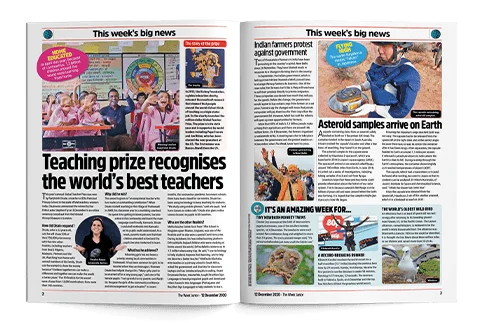
What impresses us most is how it handles hard news. The Week Junior sticks to the facts, presents more than one point of view and writes in a way that informs without alarming. When a frightening story is everywhere, that balance is exactly what most parents are looking for, and it gives you a ready made starting point for a conversation.

The articles are short and punchy. That is a big plus for reluctant readers: a child who would never pick up a 300 page novel can finish a whole issue, feel good about it and come back next week. Confident readers get the longer All About feature and plenty to chew on in the debate pages.
How much does The Week Junior cost?
There are three formats, and the price depends on how you pay. On the rolling plans, delivery is included in the UK.
| Plan | Ongoing price | What you get |
|---|---|---|
| £37.99 every 3 months (13 issues) | Weekly printed magazine, free parent newsletter | |
| Print + Digital | £39.99 every 3 months | Print copy plus the digital edition on any device and a searchable library of more than 250 back issues |
| Digital | £29.99 every 3 months | Digital edition and back issue library only |
Paying for longer cuts the cost. The print magazine is also sold on six monthly plans from around £60 to £68 (26 issues) and annual plans from around £100 to £120 (52 issues), depending on the offer running. There is also a fixed one year subscription that does not renew, which is the tidy option for a gift.
The real cost: on the quarterly print plan you pay about £2.92 an issue, or roughly £152 a year. On an annual plan at £99.99 it drops to under £2 an issue. Compare that with £3.99 for a single copy in the shops and the subscription saves you somewhere between a quarter and half the cover price.
New subscribers are almost always offered a cheap trial first, such as a run of issues for a token amount, before the normal price kicks in. It is a sensible way to test whether your child actually reads it. Just note the date the trial ends, because it rolls into the regular plan automatically.
How it works
- Pick Print, Digital or Print + Digital on the official site, and choose rolling quarterly, six monthly or annual payments.
- Choose your start issue at checkout. It defaults to the next issue but you can change it, which is handy if you are planning a birthday or Christmas surprise.
- Tick the gift option if it is for someone else and send it to any address you like.
- Manage everything afterwards at mymagazine.co.uk, Future’s subscription account site.
The digital edition works on iPad, iPhone and Android devices, and there is a web reader for anything else. If your child already spends too long on a screen, we would stick with print. The joy of The Week Junior is a physical magazine arriving every week.

Delivery
The print magazine is delivered weekly and should arrive around the on sale date, which is a Friday. UK delivery is included in the price, and the brand promotes plastic free home delivery. Your first issue date is shown at checkout. You can also send it abroad: the price changes by region to cover postage, and international copies can take up to around 14 extra days to arrive. If an issue goes missing, you can request a replacement through mymagazine.co.uk or the customer services team.
Can you pause or cancel The Week Junior?
Cancelling is straightforward. The main plans are rolling subscriptions, so they renew until you stop them, and you can cancel the auto renewal at any time through mymagazine.co.uk. You keep receiving the issues you have already paid for, then it stops. Customer services can be reached by email at [email protected], Monday to Friday 8.30am to 7pm and Saturday 10am to 3pm.
There is no skip a week button like you would get with a meal kit. Future does not advertise a pause option, so if you are going away, the magazines will simply be waiting when you get back. Given it is weekly news, we think that is fine: most families just catch up on the All About features and puzzles.
What makes The Week Junior different?
Plenty of children’s magazines are really comics with a few facts, or toy catalogues with a free gift taped to the front. The Week Junior is neither. It treats children as people who can understand the world, and it is genuinely journalism: real news, edited carefully, published every single week.
Three things set it apart for us:
- It builds opinions, not just knowledge. The Big Debate format teaches kids to weigh up two sides before deciding what they think. That is a rare skill to practise at 10.
- It is calm. Big, complex subjects like politics, race and climate change are explained clearly and without sensationalism.
- It is weekly. A monthly box is an event; a weekly magazine becomes a habit. That rhythm is what turns a child into a regular reader.
The brand has also grown into books with Bloomsbury, a podcast, a free newsletter for parents and an edition for schools, so if your child loves it there is plenty more to explore.
The Week Junior Science+Nature
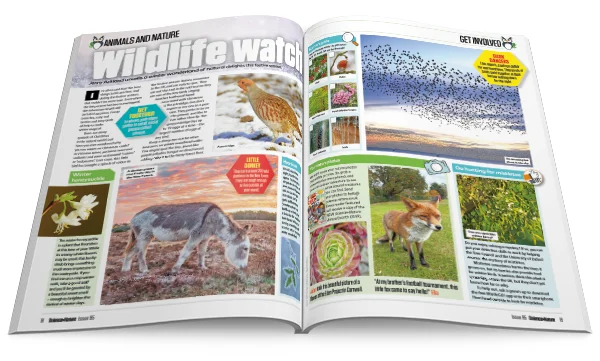
If your child is more into volcanoes and beetles than politics, look at the sister title, The Week Junior Science+Nature. It is a monthly magazine for 8 to 15 year olds with 52 pages per issue, covering science news, space, wildlife, real scientists and hands on experiments using household items. It is sent without plastic wrap, and after the introductory trial it costs £26.99 every six issues, so about £4.50 a month. Running both is a lovely combination for a science mad 10 year old, but if you can only choose one, the weekly is the better all rounder.
Alternatives to The Week Junior
- First News is the other big name in UK children’s news. It is a weekly newspaper rather than a magazine, so it feels more like a grown up paper. Worth comparing if your child prefers that format.
- MEL Science sends hands on chemistry and physics kits. Better than a magazine if your child learns by doing rather than reading.
- Letterbox Lab is a monthly science experiment box through the letterbox, aimed at younger children.
- Yoto Club delivers audiobook cards for the Yoto player, a good screen free option for kids who love stories but are not big readers yet.
Our verdict
The Week Junior is the children’s subscription we would recommend to almost any family with a child between 8 and 14. It is affordable once you are on a regular plan, it arrives every week, and it does something few products manage: it gets kids reading, thinking and talking about the world around them. The only real downsides are that the price creeps up once the trial ends and there is no pause button. Start with the trial, see if your child grabs it off the doormat, and if they do, switch to an annual plan to get the best price per issue.
Frequently asked questions
The Week Junior: your questions answered
What age is The Week Junior for?
It is written for children aged 8 to 14. Younger confident readers often enjoy it with a parent, and many readers carry on into their early teens.
How much is The Week Junior a month?
On the rolling print plan it costs £37.99 every three months, which is about £12.66 a month. The digital only plan is £29.99 a quarter, and annual print plans bring the cost down to under £2 an issue.
What day does The Week Junior arrive?
It is a weekly magazine delivered around its Friday on sale date. Your first issue date is shown when you check out.
How do I cancel my The Week Junior subscription?
Log in to mymagazine.co.uk and cancel the auto renewal, or contact customer services at [email protected]. You will still receive the issues you have already paid for.
Can I give The Week Junior as a gift?
Yes. Tick the gift option at checkout, choose the start issue and send it to any address. A fixed one year subscription that does not auto renew is also available, which suits gifts best.
Is there a digital version of The Week Junior?
Yes. The digital edition works on iPad, iPhone, Android and in a web browser, and includes a searchable library of more than 250 back issues. You can buy it alone or bundled with print.
Is The Week Junior delivered outside the UK?
Yes, it can be sent worldwide. Prices vary by country to cover postage, and international copies can take extra time to arrive.
What is the difference between The Week Junior and Science+Nature?
The Week Junior is a weekly news magazine covering everything from world events to sport. Science+Nature is a monthly title for 8 to 15 year olds focused on science, wildlife and experiments.







Questions & reviews
Have a question about this box?
Share a question, opinion or experience. Our team reads every message and will reply.