
 By
Michaël Maarek
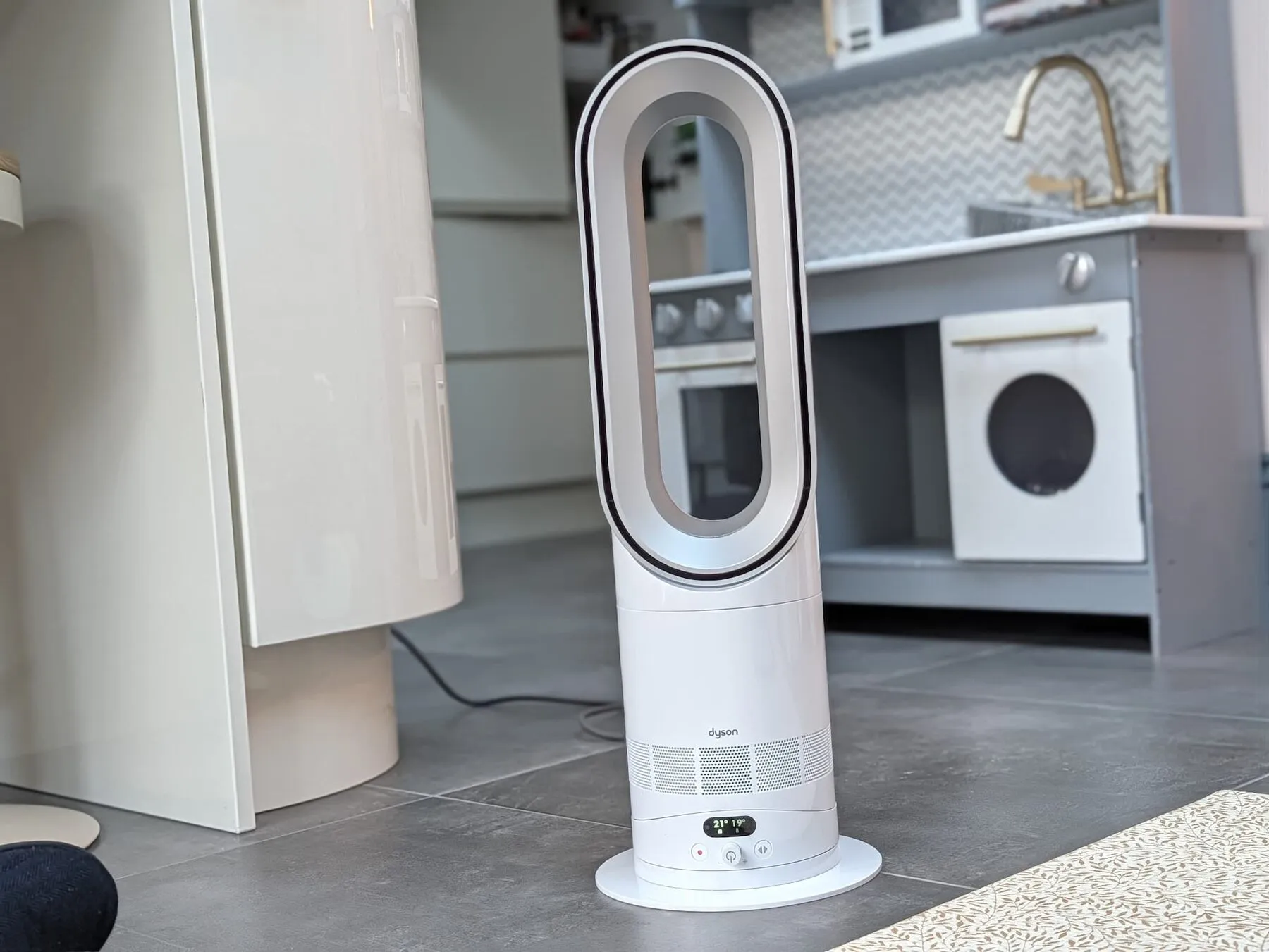
A good fan heater warms a cold bedroom, home office or conservatory in minutes without heating the whole house. Unlike oil-filled radiators that take 15 to 20 minutes to build up warmth, a modern PTC ceramic fan heater pushes hot air across the room almost immediately, then dials itself back once your target temperature is reached. We tested the Dyson Hot+Cool HF1 at home in our bedroom and compared it with 12 other electric fan heaters sold in the UK, from £49.99 compact desk heaters to £399.99 bladeless year-round machines.
The short answer: if you want a whisper-quiet, compact, year-round heater and cooling fan with app scheduling and a proper remote, the Dyson Hot+Cool HF1 is our top pick (9/10 in our bedroom test). On a tighter budget, the Dreo Ceramic Heater 316 (£49.99) gives you a 1°C digital thermostat and remote in a tiny footprint, while the Pro Breeze 1800W Circular Mini (£52.99) adds 75° oscillation. For ultra-quiet smart heating under £80, pick the Philips 3000 Series (CX3120/01) (24 dB(A) on its lowest setting). For a taller oscillating smart tower, choose the Dreo Ceramic Heater 513S (£89.99) or the Quiet Mark certified Pro Breeze ThermaCube Plus 2200W (£79.99). For 360° design-led heating, the Duux Threesixty (Gen 2); and for a large-room 2-in-1 bladeless tower, the Shark TurboBlade Cool + Heat.
Our picks
- Best overall & best for bedrooms (tested, 9/10): Dyson Hot+Cool HF1 (£399.99 usual UK price). 2,250W bladeless heater and cooling fan, 26 dBA Sleep mode, 2.59kg, 70° oscillation, remote, on-unit dial and MyDyson Wi-Fi app with 7-day scheduling.
- Best compact budget fan heater under £50: Dreo Ceramic Heater 316 (Atom 316) (£49.99). 1,500W PTC ceramic heater, 1.25kg, 34 dB, 1°C digital thermostat, ECO mode, 12-hour timer and remote control (no oscillation).
- Best budget oscillating fan heater: Pro Breeze 1800W Circular Ceramic Mini Fan Heater (£52.99 usual UK price). 23cm tall, 1,800W, 75° oscillation, 15 to 35°C digital thermostat, ECO mode and Good Housekeeping Institute approval.
- Best tall ceramic tower under £80: Pro Breeze ThermaCube Plus 2200W Ceramic Fan Heater (£79.99 usual UK price). 58.1cm tower, 2,200W output, Quiet Mark certified, 65° oscillation, 15 to 35°C digital thermostat and ECO mode.
- Best ultra-quiet smart fan heater: Philips Compact Ceramic Heater 3000 Series (CX3120/01) (£79.99 usual UK price). 2,000W, down to 24 dB(A) with a low-noise DC motor, 45° oscillation, Air+ app with EcoAI mode and 1.70kg carry-handle build.
- Best smart oscillating tower heater: Dreo Ceramic Heater 513S (£89.99). 2,000W PTC ceramic tower, 34 dB, 70° oscillation, 5 to 35°C thermostat, 12-hour timer, touch, remote, Dreo app and voice control.
- Best 360° smart compact heater: Duux Threesixty Smart Fan Heater (Gen 2) (£119.99 usual UK price). 1,800W organic cylinder design, 360° heat distribution for rooms up to 30m², 46 dB, Wi-Fi Duux app (18 to 30°C) and Quiet Mark badge.
- Best 2-in-1 bladeless tower for larger rooms: Shark TurboBlade Cool + Heat (TH200UK) (£364.99 usual UK price). 2,200W bladeless fan and heater with 180° oscillation, vertical Tower and horizontal Air Blanket modes, Thermo IQ and magnetic remote.
How we chose: 13 models analysed, 1 tested hands-on
We compared 13 electric fan heaters that UK buyers regularly shortlist: Dyson Hot+Cool HF1, Dyson Purifier Hot+Cool HP1 and Dyson Hot+Cool AM09, Dreo Ceramic Heater 316 (Atom 316) and Dreo Ceramic Heater 513S, Pro Breeze 1800W Circular Ceramic Mini and ThermaCube Plus 2200W, Philips Compact Ceramic Heater 3000 Series (CX3120/01), Duux Threesixty Smart Fan Heater (Gen 2), Shark TurboBlade Cool + Heat (TH200UK), De’Longhi Capsule (HFX30C18), Russell Hobbs 2kW Oscillating Ceramic Tower (RHCTH2002G) and Dimplex 2kW/3kW Upright Fan Heater (DXFF30TSN).
- Dyson Hot+Cool HF1, tested at home in our bedroom by Michaël Maarek alongside our two other Dysons and compared against a cheaper Amazon fan heater (9/10). Read our full Dyson HF1 review.
For the remaining 12 models, we checked the brands’ official UK stores and UK electrical retailers for usual retail prices, maximum wattage, stated noise ratings, oscillation angles, controls, weights, safety features and guarantees. Our hands-on bedroom test gave us the criteria that matter once a heater is actually living in your home.
What our testing taught us
Before switching to the Dyson HF1 in our bedroom, Michaël used an inexpensive fan heater bought on Amazon that took too long to warm the space. Living with the HF1 alongside two older, larger Dysons highlighted five things spec sheets rarely spell out:
Small, light, very quiet and simple to use: the bedroom heater I wanted.
- Noise decides whether you can actually sleep or work near it. Many cheap 2kW fan heaters roar at 50 to 55 dB. In a bedroom or on video calls, a quiet Sleep or low setting (24 to 34 dB) makes the difference between leaving the heater on comfortably and switching it off in annoyance.
- Weight and footprint matter if you move it between rooms. At 2.59kg and 585mm tall, the HF1 is roughly half the size and weight of a purifying Dyson (5.26kg). If you do not need HEPA air filtration, skipping the filter makes a heater far easier to carry from bedroom to home office.
- On-unit controls save you when the remote goes missing. Having a physical temperature dial and dedicated heat button on the base of the HF1 proved genuinely practical next to the bed, even with a magnetic remote and Wi-Fi app available.
- A precise thermostat matters more than headline wattage. Every direct electric heater converts roughly 100% of its electricity into heat. What keeps bills down is an accurate thermostat that cycles the element off once your room hits 19°C or 20°C instead of blasting 2kW non-stop.
- A proper cooling fan mode earns its storage space in July. Basic ceramic heaters sit in a cupboard for eight months of the year. Dual-purpose bladeless fans like the Dyson HF1 and Shark TurboBlade stay useful all summer.

Comparison table
| Fan heater | Usual UK price | Max power | Stated noise | Oscillation | Cooling fan | Controls & smart | Weight | Guarantee |
|---|---|---|---|---|---|---|---|---|
| Dyson Hot+Cool HF1 | £399.99 | 2,250 W | 26 to 44 dBA | 70° + manual tilt | Yes (30 W) | Remote, base dial, MyDyson app, voice | 2.59 kg | 2 years |
| Dreo Ceramic Heater 316 | £49.99 | 1,500 W | 34 dB | No | Fan-only mode | Touch panel, remote, 12h timer | 1.25 kg | Check brand UK |
| Pro Breeze 1800W Circular Mini | £52.99 | 1,800 W | Not listed on UK page | 75° | Fan-only mode | Digital display, 15 to 35°C, ECO | Not listed on UK page | Check brand UK |
| Pro Breeze ThermaCube Plus 2200W | £79.99 | 2,200 W | Quiet Mark certified (dB not listed) | 65° | Fan-only mode | Digital display, 15 to 35°C, ECO | Not listed on UK page | Check brand UK |
| Philips 3000 Series (CX3120/01) | £79.99 | 2,000 W | From 24 dB(A) | 45° | Ventilation mode | Touch, Air+ app (EcoAI), voice | 1.70 kg | 2 years |
| Dreo Ceramic Heater 513S | £89.99 | 2,000 W | 34 dB | 70° | Fan-only mode | Touch, remote, Dreo app, voice, 12h timer | Not listed on UK page | Check brand UK |
| Duux Threesixty (Gen 2) | £119.99 | 1,800 W | 46 dB | 360° outlet | Eco & Boost fan | 2 buttons, Duux Wi-Fi app (18 to 30°C) | ~2.3 kg | 2 years (with registration) |
| Shark TurboBlade Cool + Heat | £364.99 | 2,200 W | 66.7 dB max | Up to 180° | Yes (10 speeds) | Magnetic remote, Thermo IQ (no app) | 9.2 to 9.9 kg | 2 years (with registration) |
Prices are usual UK retail prices on each brand’s UK store (Philips RRP across Philips UK and major UK electrical retailers). Noise, weight and warranty figures come from each brand’s UK product pages; where a figure was not published on the UK page, the table says so.
Dyson Hot+Cool HF1: best overall & best for bedrooms

Our score: 9/10. The Dyson Hot+Cool HF1 is Dyson’s dedicated heater and cooling fan without an air-purifier filter. That choice cuts the height to 585mm and the weight to 2.59kg while keeping 2,250W ceramic heating, Air Multiplier projection, 70° oscillation, a 12 to 32°C thermostat and a whisper-quiet 26 dBA Sleep mode. Wi-Fi setup in the MyDyson app was straightforward in our test, letting you pre-heat the bedroom before getting home or run a seven-day schedule, and the magnetic remote worked without lag. Michaël’s take after comparing it with cheaper heaters:
A £40 to £50 ceramic heater will warm a small room, so you are not paying Dyson prices for heat alone. What the extra money buys is the quiet running, the compact design, the build quality, a proper fan for summer and the app and remote.
Who it’s for: bedrooms, home offices and design-conscious buyers who want quiet operation, easy app scheduling and a genuine summer fan in one compact machine.
Pros: very quiet (26 dBA Sleep mode, 44 dBA max); roughly half the size and weight (2.59kg) of Dyson’s purifying heaters; heats a bedroom quickly in our test; works well as a 30W summer cooling fan; intuitive base dial, magnetic remote, MyDyson app and voice control; tip-over shut-off, child lock and 2-year guarantee.
Cons: expensive at £399.99 usual UK price (often reduced to £349.99); no HEPA air purification; stock fluctuates on Dyson UK; T3 reported the body gets very hot in heater mode (though Michaël did not notice this during his test).
Usual UK price: £399.99 at Dyson UK (often £349.99 on promotion).
See Dyson Hot+Cool HF1 at Dyson UK
Dreo Ceramic Heater 316 (Atom 316): best compact budget fan heater under £50

If you simply want fast, thermostatically controlled warmth under a desk or beside a bed without spending £100+, Dreo’s Ceramic Heater 316 (sold on Amazon UK as the Atom 316) is hard to beat. Measuring just 15.3 × 15.3 × 24.5cm and weighing 1.25kg, it packs a 1,500W PTC ceramic element, 1°C digital thermostat control, Power Heat, ECO and Fan Only modes, a 1 to 12-hour off timer and a remote control, all rated at 34 dB.
Who it’s for: home workers, students and anyone wanting an affordable, lightweight spot heater for a desk or small bedroom.
Pros: strong value at £49.99; compact 1.25kg build with 1.8m cord; 1°C digital thermostat and ECO mode; 34 dB noise rating; includes remote control, tip-over and overheat protection.
Cons: does not oscillate, so heat stays directional; 1,500W max output suits small rooms rather than large lounges; standard 316 has no Wi-Fi (Dreo sells a 316S Wi-Fi variant for £59.99).
Usual UK price: £49.99 on Dreo UK (frequently discounted on Amazon UK).
See Dreo Ceramic Heater 316 at Dreo UK
Pro Breeze 1800W Circular Ceramic Mini Fan Heater: best budget oscillating heater

Where the Dreo 316 stays fixed in one direction, Pro Breeze’s 1800W Circular Ceramic Mini adds 75° wide-angle oscillation and an extra 300W of heating power for just £3 more at full RRP. Standing only 23cm tall, it is endorsed by the Good Housekeeping Institute, offers High, Low, Fan Only and ECO modes, and lets you set a target temperature from 15 to 35°C in 1°C increments for rooms up to 30m².
Who it’s for: small to medium home offices and bedrooms where you want oscillating warmth in a compact tabletop or floor-standing heater.
Pros: 75° oscillation in a tiny 23cm frame; 1,800W ceramic output; 15 to 35°C digital thermostat with ECO mode; tip-over switch, overheat protection and flame-retardant housing; Good Housekeeping Institute approved.
Cons: no Wi-Fi app; noise figure and exact weight are not published on Pro Breeze’s UK product page.
Usual UK price: £52.99 on Pro Breeze UK (often reduced to £39.99).
See Pro Breeze 1800W Circular Mini at Pro Breeze UK
Pro Breeze ThermaCube Plus 2200W: best tall ceramic tower under £80

Short tabletop heaters can struggle to clear sofas and coffee tables. At 58.1cm tall with a 2,200W ceramic element and 65° oscillation, the Pro Breeze ThermaCube Plus pushes warm air further across a bedroom, home office or living room (rated up to 30m²). It carries Quiet Mark certification alongside a 15 to 35°C digital thermostat, High/Low/Fan Only/ECO modes and triple safety protection.
Who it’s for: buyers who want a taller, higher-wattage oscillating tower heater with Quiet Mark certification for well under £100.
Pros: 2,200W fast warm-up; 58.1cm height projects heat over furniture; Quiet Mark certified; 65° oscillation and 1°C digital thermostat with ECO mode; often drops to £59.99 in promotions.
Cons: no Wi-Fi app control; exact decibel rating and weight are not listed on the UK page; a few customer reviews mention an over-sensitive tip-over switch on thick carpet.
Usual UK price: £79.99 on Pro Breeze UK (often £59.99 on offer).
See Pro Breeze ThermaCube Plus 2200W at Pro Breeze UK
Philips Compact Ceramic Heater 3000 Series (CX3120/01): best ultra-quiet smart heater

Noise is the main reason people stop using bedroom fan heaters, and Philips tackles it directly with a low-noise DC motor rated down to 24 dB(A) on its lowest setting. Despite weighing just 1.70kg with a built-in carry handle, the CX3120/01 delivers 2,000W of 2-second ceramic heat for rooms up to 20m², 45° oscillation, five safety protections and Wi-Fi control via the Philips Air+ app. Its EcoAI Auto+ mode tracks room temperature, outside weather and your habits to cut energy waste automatically.
Who it’s for: light sleepers, home-office workers and anyone wanting Dyson-like quietness and app control at a fifth of the price.
Pros: ultra-quiet 24 dB(A) minimum noise; 2,000W rapid heating in a light 1.70kg body; 45° oscillation; Air+ Wi-Fi app with EcoAI scheduling and voice control; 2-year warranty.
Cons: narrower 45° oscillation than Dreo (70°) or Pro Breeze (75°); shorter 1.5m power cord; no physical remote included (relies on top panel or app).
Usual UK price: £79.99 at Philips UK and major UK electrical retailers.
See Philips 3000 Series CX3120/01 at Philips UK
Dreo Ceramic Heater 513S: best smart oscillating ceramic tower

If you like the Dreo 316’s clean design and thermostat accuracy but want whole-room reach, oscillation and smart home control, the Dreo Ceramic Heater 513S upgrades almost every spec. You get 2,000W Hyperamics ceramic heat, 70° wide-angle oscillation, 34 dB quiet running, a 5 to 35°C thermostat in 1°C steps, a 12-hour timer, and four ways to control it: touch panel, included remote, Dreo Wi-Fi app and voice assistants.
Who it’s for: bedrooms and medium living rooms where you want both a physical remote and smart app scheduling on a sub-£100 budget.
Pros: 2,000W output with 70° oscillation; 34 dB noise rating; touch, remote, Wi-Fi app and voice control all included; 5 to 35°C digital thermostat and ECO mode; 8-layer Shield360° safety suite.
Cons: costs £15 more than the non-Wi-Fi Dreo 513 (£74.99); fan-only mode is basic compared with a dedicated summer cooling fan; weight is not listed on the UK product page.
Usual UK price: £89.99 on Dreo UK.
See Dreo Ceramic Heater 513S at Dreo UK
Duux Threesixty Smart Fan Heater (Gen 2): best 360° design-led smart heater

Instead of oscillating left and right, the Duux Threesixty (Gen 2) pulls air in and pushes warm air evenly in a full 360° circle from a minimalist 22cm-wide cylinder. Rated at 1,800W for rooms up to 30m², Generation 2 adds a full 18 to 30°C thermostat via the free Duux Wi-Fi app, drops noise to 46 dB and includes tip-over shut-off, overheat protection and a bottom safety switch so it cannot be nudged on accidentally.
Who it’s for: style-conscious buyers who want a compact, unobtrusive smart heater that sits neatly in the middle of a room or beside a sofa.
Pros: 360° all-round heat distribution; compact 22 × 29.5cm matte design; 1,800W PTC element with 3 heat levels plus Eco and Boost fan modes; Wi-Fi Duux app and 2-year warranty (with registration).
Cons: £119.99 full RRP is pricey compared with Philips and Dreo (though frequently discounted on Duux UK); on-unit controls are only two minimalist buttons, so you rely on the app for exact temperatures; 46 dB is louder than the Dyson HF1 or Philips 3000 Series.
Usual UK price: £119.99 on Duux UK (often discounted during promotions).
See Duux Threesixty (Gen 2) at Duux UK
Shark TurboBlade Cool + Heat (TH200UK): best 2-in-1 bladeless tower for larger rooms

Shark’s answer to Dyson is a full-height 2-in-1 bladeless tower fan and 2,200W space heater with a party trick: its twin vents pivot from vertical Tower mode to horizontal Air Blanket mode, with up to 180° oscillation and Thermo IQ auto-adjusting heat. In summer, you get 10 cooling fan speeds and a wipe-clean Dust Defence filter at the base, controlled via a magnetic remote with an LCD display.
Who it’s for: larger lounges or open-plan rooms where you want a powerful summer tower fan and winter heater in one machine without paying Dyson Purifier prices.
Pros: 2,200W heating plus a genuinely strong 10-speed summer fan; vertical Tower and horizontal Air Blanket modes with 180° oscillation; Thermo IQ thermostat control; 2-year guarantee (with registration) and frequently discounted well below RRP.
Cons: heavy (9.2 to 9.9kg) and tall (116.7cm), so not a carry-between-rooms heater; no Wi-Fi or app control; stated maximum noise of 66.7 dB is noticeably louder than the Dyson HF1.
Usual UK price: £364.99 on SharkNinja UK (frequently reduced to around £199.99 to £214.99).
See Shark TurboBlade Cool + Heat at SharkNinja UK
Also worth a look
- Dyson Purifier Hot+Cool HP1 (around £449.99 to £549.99 across Dyson UK and UK electrical retailers): adds fully sealed HEPA H13 and activated carbon filtration plus air-quality sensing to the Dyson heater-and-fan formula, at the cost of extra bulk (5.26kg vs 2.59kg for the HF1) and higher stated noise (46 to 63 dBA).
- Dyson Hot+Cool AM09 (£399.99 RRP new, often around £300 refurbished): the older predecessor to the HF1. Same bladeless idea and 70° oscillation, but louder and without Wi-Fi or the MyDyson app.
- De’Longhi Capsule (HFX30C18) (around £45 to £65 at UK stockists): a simple, lightweight (1.3kg) 1,800W ceramic fan heater with manual rotary dials (900W/1,800W), anti-frost mode and summer ventilation for buyers who dislike touchscreens and apps.
- Russell Hobbs 2kW Oscillating Ceramic Tower (RHCTH2002G / RHCTH2002S) (around £45 to £75 at Currys, Very and Wilko): widely available UK high-street 2kW tower with 5 to 36°C thermostat, 24-hour timer and remote (smart Wi-Fi variants also sold).
- Dimplex Upright Fan Heater (2kW / 3kW, e.g. DXFF30TSN) (around £35 to £55 at UK electrical stores): classic high-output upright fan heater for garages or quick blasts of heat, though louder and less refined than modern PTC ceramic towers.
Running costs: how much does a fan heater cost per hour in the UK?
Under the Ofgem energy price cap of 26.32p per kWh for electricity (Direct Debit average, 1 October to 31 December 2026, with 0% VAT on domestic electricity), running costs are simple arithmetic: multiply the heater’s power in kilowatts by 26.32p.
| Heater wattage | 1 hour at full power | 2 hours with thermostat cycling (~60% duty) | Typical example |
|---|---|---|---|
| 30 W (cooling fan mode) | 0.8p | 1.6p (continuous) | Dyson Hot+Cool HF1 in fan-only mode |
| 1,000 W (Eco / low setting) | 26p | ~32p | Low setting on ceramic fan heaters |
| 1,500 W | 39p | ~47p | Dreo Ceramic Heater 316 |
| 1,800 W | 47p | ~57p | Pro Breeze 1800W Mini, Duux Threesixty 2 |
| 2,000 W | 53p | ~63p | Philips 3000 Series, Dreo 513S |
| 2,250 W | 59p | ~71p | Dyson Hot+Cool HF1, Pro Breeze 2200W |
Fan heater vs gas central heating: electricity at 26.32p/kWh costs over three times as much per unit as mains gas (7.97p/kWh under the same Q4 2026 cap). A fan heater is therefore more expensive for heating an entire home all day, but can still be cheaper when you work from home alone and only need to warm one small study for an hour or two instead of firing up a 15kW to 24kW gas boiler for the whole house.
How to choose a fan heater
- Ignore “energy-efficient heater” hype and look for a good thermostat. Every plug-in electric heater converts virtually 100% of electricity into heat. Real savings come from a 1°C digital thermostat, an ECO mode that drops wattage automatically as the room warms, and a timer or app schedule so you never forget to turn it off.
- Choose ceramic (PTC) over exposed wire coils. Modern PTC ceramic fan heaters warm up in 2 to 3 seconds, self-regulate their element temperature and avoid the burnt-dust smell common with cheap spiral-wire heaters.
- Match noise to the room. For a bedroom or home office, look for a Sleep or quiet mode under 35 dB (Dyson HF1 at 26 dBA, Philips 3000 Series at 24 dB(A), Dreo 316/513S at 34 dB) or Quiet Mark certification.
- Check oscillation and height. Non-oscillating mini heaters (like the Dreo 316) are great aimed at your feet under a desk. For warming a whole bedroom or lounge, pick 45° to 75° oscillation, 360° airflow (Duux) or a taller tower (Pro Breeze ThermaCube Plus, Dyson HF1, Shark TurboBlade).
- Follow UK electrical and bathroom safety rules. Always plug a 1,500W to 2,250W fan heater straight into a UK 13A wall socket, never into an extension lead or multi-way cube adaptor, which can overheat. Never use a standard portable fan heater in a bathroom: UK wiring rules require a fixed, suitably IP-rated bathroom heater installed outside splash zones.

Frequently asked questions
Fan heaters UK: your questions answered
How much does it cost per hour to run a 2,000W fan heater in the UK?
At the October to December 2026 Ofgem electricity price cap of 26.32p per kWh, a 2,000W (2kW) fan heater costs about 53p per hour if it runs at full power continuously. Once the room reaches your target temperature, a digital thermostat cycles the heating element off, so real-world hourly costs in a small insulated room are typically lower.
Which is the best type of portable room heater?
It depends on how long you stay in the room. Fan heaters (especially PTC ceramic models) are best for fast, short bursts of 15 minutes to 2 hours because they blow warm air immediately. Oil-filled radiators take 15 to 20 minutes to warm up, but run completely silently and retain heat after switching off, making them better for steady all-evening heating.
Is an oscillating fan heater better?
For warming a whole bedroom, lounge or office, yes: 45° to 75° oscillation (or 360° output on the Duux Threesixty) spreads warm air evenly and prevents a single hot spot. A non-oscillating heater like the Dreo 316 is still fine if you only want targeted warmth at a desk.
What is the best portable fan heater for a bedroom in the UK?
Prioritise low noise, a dimmable display, a sleep timer and a tip-over cut-off. In our bedroom test, the Dyson Hot+Cool HF1 scored 9/10 thanks to its 26 dBA Sleep mode, compact 2.59kg size and MyDyson timer. On a budget under £80, the Philips 3000 Series (CX3120/01) runs down to 24 dB(A) and the Dreo 513S is rated at 34 dB.
Which electric heater uses the least electricity?
Lower-wattage heaters (such as 500W personal desk heaters or 1,000W Eco settings) draw less power per hour, but they also deliver less heat. Because all direct electric heaters are roughly 100% efficient at turning electricity into heat, the cheapest heater to run for a given room temperature is one with an accurate digital thermostat, ECO mode and timer that avoids overheating the space.
Can you sleep with a fan heater on overnight?
Most UK fire services advise against leaving portable heaters running unattended while you sleep. A safer routine is to use a sleep timer (15 to 60 minutes) to warm the bedroom before you drift off, or an app schedule to pre-heat the room 15 minutes before your alarm. Always keep any heater at least a metre away from duvets, curtains and clothing.
Can you plug a fan heater into an extension lead in the UK?
No. A 2,000W to 2,250W fan heater draws nearly 10 amps continuously, which can overheat coiled or multi-way extension leads and cause a fire. Plug every portable heater directly into a fixed UK 13A wall socket.
Can I use a portable fan heater in a bathroom?
No. Standard UK plug-in fan heaters are not rated for damp rooms and UK regulations prohibit standard 13A sockets within 3 metres of a bath or shower. For a bathroom, use a permanently wired, IPX4-rated wall-mounted fan heater or towel rail fitted by a qualified electrician.
What is the difference between a ceramic (PTC) fan heater and a standard fan heater?
Standard budget fan heaters blow air across a glowing metal wire coil, which can smell of scorched dust and stays very hot. Ceramic fan heaters pass air through PTC (Positive Temperature Coefficient) ceramic plates that heat up in 2 to 3 seconds, self-regulate their resistance as they get hot, and generally last longer.
How does the Dyson HF1 compare with the Dyson Purifier Hot+Cool HP1 and AM09?
The HF1 replaces the older AM09 with Wi-Fi, the MyDyson app, faster heating and quieter operation (26 to 44 dBA). Compared with the Purifier Hot+Cool HP1, the HF1 drops the HEPA filter, making it roughly half the weight (2.59kg vs 5.26kg), quieter on Dyson’s figures and cheaper.
Do electric fan heaters work as cooling fans in summer?
Most ceramic fan heaters have a basic fan-only mode, which moves a light breeze at close range. If you want genuine whole-room summer cooling, choose a dedicated dual-purpose bladeless fan and heater such as the Dyson Hot+Cool HF1 or Shark TurboBlade Cool + Heat.
Do electric panel heaters use less electricity than fan heaters?
No. A 2,000W panel heater and a 2,000W fan heater use the exact same electricity per hour at full power (about 53p at 26.32p/kWh). Panel heaters are silent and slim for wall mounting, while fan heaters warm a cold room faster by actively circulating air.
Our verdict
If you want a quiet, compact, well-built heater you will happily leave out all year as a summer fan too, the Dyson Hot+Cool HF1 earned its 9/10 in our bedroom test. If you want most of the warmth for a fraction of the price, the Philips 3000 Series (CX3120/01) (£79.99) stands out for 24 dB(A) quietness and smart EcoAI control, the Dreo Ceramic Heater 513S (£89.99) gives you 2,000W oscillating smart tower heat with a remote, and the Dreo 316 (£49.99) or Pro Breeze 1800W Circular Mini (£52.99) cover tight budgets.
Upgrading other everyday home appliances? See our best kettle UK guide and our best mini oven UK guide.
Update log and sources
- November 2026: guide published. Usual UK retail prices and specifications checked on 28 November 2026 on Dyson UK, Dreo UK, Pro Breeze UK, Philips UK, Duux UK and SharkNinja UK.
- Our hands-on test: Dyson Hot+Cool HF1 review (tested in a bedroom by Michaël Maarek, 9/10).
- UK running cost calculations based on the Ofgem energy price cap for 1 October to 31 December 2026 (26.32p/kWh electricity, 7.97p/kWh gas, Direct Debit average).
Questions & reviews
Have a question about this box?
Share a question, opinion or experience. Our team reads every message and will reply.